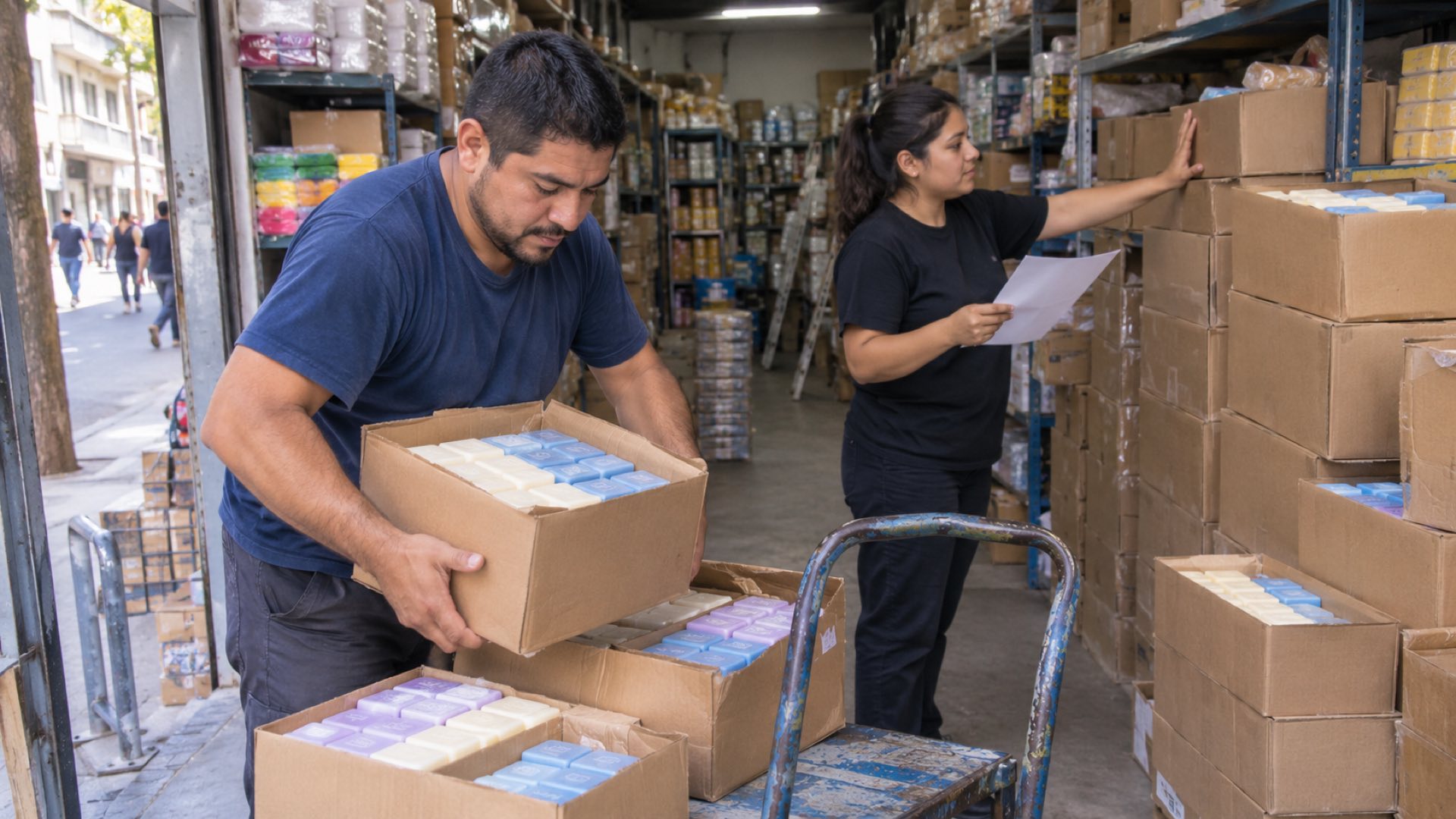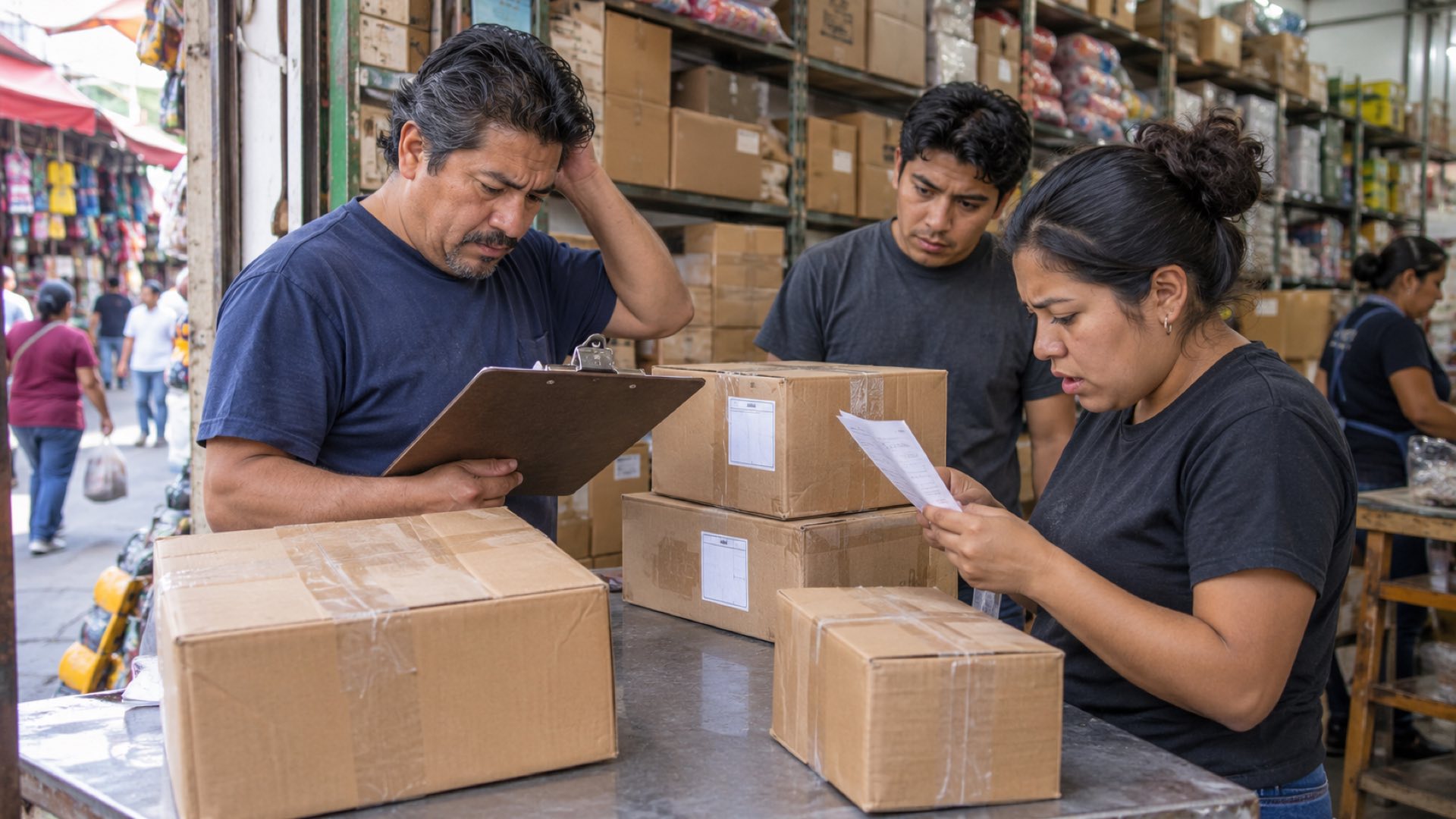
Three boxes arrived at the store, but two SKUs got the same barcode. The night shift kept selling. The next day's count showed 17 units missing. After three days of digging through shipping records, the owner found the problem: last week's partial shipment wasn't recorded separately. The customer ordered 50 boxes and received 30, but the system deducted 50 from inventory.
This isn't an isolated case. Wholesale merchants in Bangkok's Sampeng Lane, hardware traders in Dubai's Deira market, and trading companies managing 200+ SKUs in Jakarta's Mangga Dua all face the same issue: inventory numbers don't match actual stock.
Three Root Causes of Inventory Inaccuracy
Order quantity and shipped quantity get mixed together.
Partial shipments are normal in wholesale. A customer orders 100 boxes, the warehouse ships 60 that are in stock, and the remaining 40 arrive after restocking. If you deduct the full order quantity when the order is placed, your book inventory will be 40 boxes lower than what's actually in the warehouse. If you wait until everything ships, the 60 boxes already sent might get sold to walk-in customers or allocated to another order.
Order confirmation and delivery are two separate actions. Order quantity represents what the customer wants, shipped quantity represents what actually left the warehouse, and pending quantity is the difference between the two. Combining these three numbers into one makes it impossible to tell later whether a discrepancy came from a missed shipment, a quantity change, or a recording error.
Shared wholesale and retail inventory hides pending shipments.
Many merchants do both wholesale and retail from the same inventory pool. The problem is that goods promised to wholesale customers but not yet shipped don't show up as unavailable for retail sale. Walk-in customers might buy reserved stock. Or if you treat pending shipments as already shipped, your available inventory gets underestimated.
When sharing inventory, check three points along each order: Can you see the pending quantity after order confirmation? Does each shipment record the quantity shipped and update the balance? Do retail sales reflect in the same inventory record? When transferring between warehouses or stores, distinguish between transferred-out, in-transit, and transferred-in to avoid recording internal movements as customer shipments.
Manual handoffs create discrepancies.
In small teams, the owner creates orders, the warehouse ships, and accounting reconciles. Three people, three spreadsheets. The warehouse marks a shipment on paper, and the owner enters it into the system 8 hours later. During those 8 hours, a customer might pick up goods or return items. Paper records and system records start to diverge.
The problem with manual handoffs isn't "who made a mistake." It's the lack of timestamps and accountability. When book inventory doesn't match physical stock, no one can pinpoint which step caused the difference.
Three Actionable Fixes
Separate order quantity, shipped quantity, and pending quantity.
You don't need to switch systems. Change how you record first. Each order needs at least three columns: ordered quantity, quantity shipped this time, and cumulative shipped quantity. Record the quantity and date for each shipment, then update the cumulative total. Pending quantity equals ordered quantity minus cumulative shipped quantity.
The benefit is that opening any order shows you: what the customer wanted, what you've shipped, and what's still outstanding. During inventory counts, cross-check pending quantities against actual stock. If you have 40 boxes pending and 40 boxes untouched in the warehouse, your records are accurate. If the warehouse only has 25 boxes, 15 boxes are missing somewhere else.
Add timestamps to every inventory movement.
Whether using a system or spreadsheet, record the time, operator, and reason for every inventory change. Log shipments, returns, and transfers. When book and physical counts don't match, trace back by timeline: when was the last time everything matched, and what happened after that?
Timestamps also clarify accountability. The warehouse shipped 10 boxes at 3 PM. The system shows a record at 3:12 PM with operator Zhang San. If the books show only 8 boxes shipped, the discrepancy happened during shipping, not reconciliation.
Run cycle counts regularly instead of waiting for year-end.
Year-end inventory happens once a year. By then, discrepancies have accumulated over 365 days. Cycle counting divides inventory into groups and counts one group each week or month. By year-end, each group has been counted multiple times. Problems are caught while still traceable, not after becoming "we don't know when it went wrong."
Cycle count frequency depends on transaction volume. High SKU counts and frequent shipments warrant weekly counts. Lower volume can do monthly counts. The key is maintaining rhythm, not trying to count everything at once.
What to Look for in Inventory Management Software
When manual records start failing frequently or your team grows beyond three people, consider switching systems. Don't just look at feature lists. Focus on three things:
Can it separately track order quantity, shipped quantity, and pending quantity? This is the core requirement for wholesale operations. If a system only deducts full order quantities or doesn't support partial shipments, switching systems won't solve the problem. Bring a real partial shipment order during the trial and see if the system handles it correctly.
Can it trace every inventory movement? Don't just look at current inventory numbers. Check if you can see how that number was reached: when goods were received, when they shipped, who performed the operation, and why. The more complete the traceability chain, the easier it is to locate discrepancies.
Does it support multiple language interfaces? If warehouse staff and owners speak different languages, interface language switching is essential. Owners view reports in Chinese while warehouse staff use the local language interface. The same data displayed in two languages reduces miscommunication during handoffs.
Ailit is the international edition of Kingdee's inventory software for small and medium merchants. Kingdee is listed on the main board of the Hong Kong Stock Exchange (HKEX: 0268). The software supports multilingual interfaces and partial shipment tracking. When comparing solutions, add "can we test with a real partial shipment order" to your checklist. Trial results tell you more about fit than feature lists.
FAQ
Should wholesale invoicing software deduct inventory when the order is placed or when it ships?
Update inventory based on actual shipped quantities. Confirmed order quantities track customer commitments but don't mean goods have left the warehouse. If you deduct the full order quantity when the order is placed, book inventory will be lower than actual warehouse stock, and retail might sell goods that don't exist.
How do you prevent retail from selling pending wholesale shipments when sharing inventory?
Make pending quantities from wholesale orders and actual inventory changes separately visible. Record retail sales in the same inventory record. If the system only shows total inventory, maintain a separate pending shipment list. When multiple stores or people share inventory, include reconciling this list in daily work.
What records should you keep when a customer cancels unshipped goods?
Update the pending quantity after cancellation and keep the before-and-after numbers. This makes it easier to reconcile with the original order and shipped records. If orders usually ship in full and cancellations are rare, a spreadsheet might suffice. When multiple people handle orders, traceability becomes more important to verify.
How do you determine if inventory management software suits partial shipments?
Test with a real order through multiple shipments. Check if each shipment quantity is traceable, if cumulative shipped and remaining pending quantities are clear, and if inventory changes match actual shipments. If the system only shows order totals or final status, it can't verify this workflow.