When choosing barcode inventory software, test one thing first: after scanning items into stock, does the inventory count update immediately?
Many small business owners searching for "barcode inventory software" are really looking for a tool that stops them from tracking stock in their heads. A store with 200–300 products updates its inventory every day. After a few weeks, the Excel sheet no longer reflects the actual stock. A barcode scanner automatically identifies products, deducts inventory, and creates records. Sounds simple, but the real problems start after the scan.
What Happens After You Scan Items Into Stock?
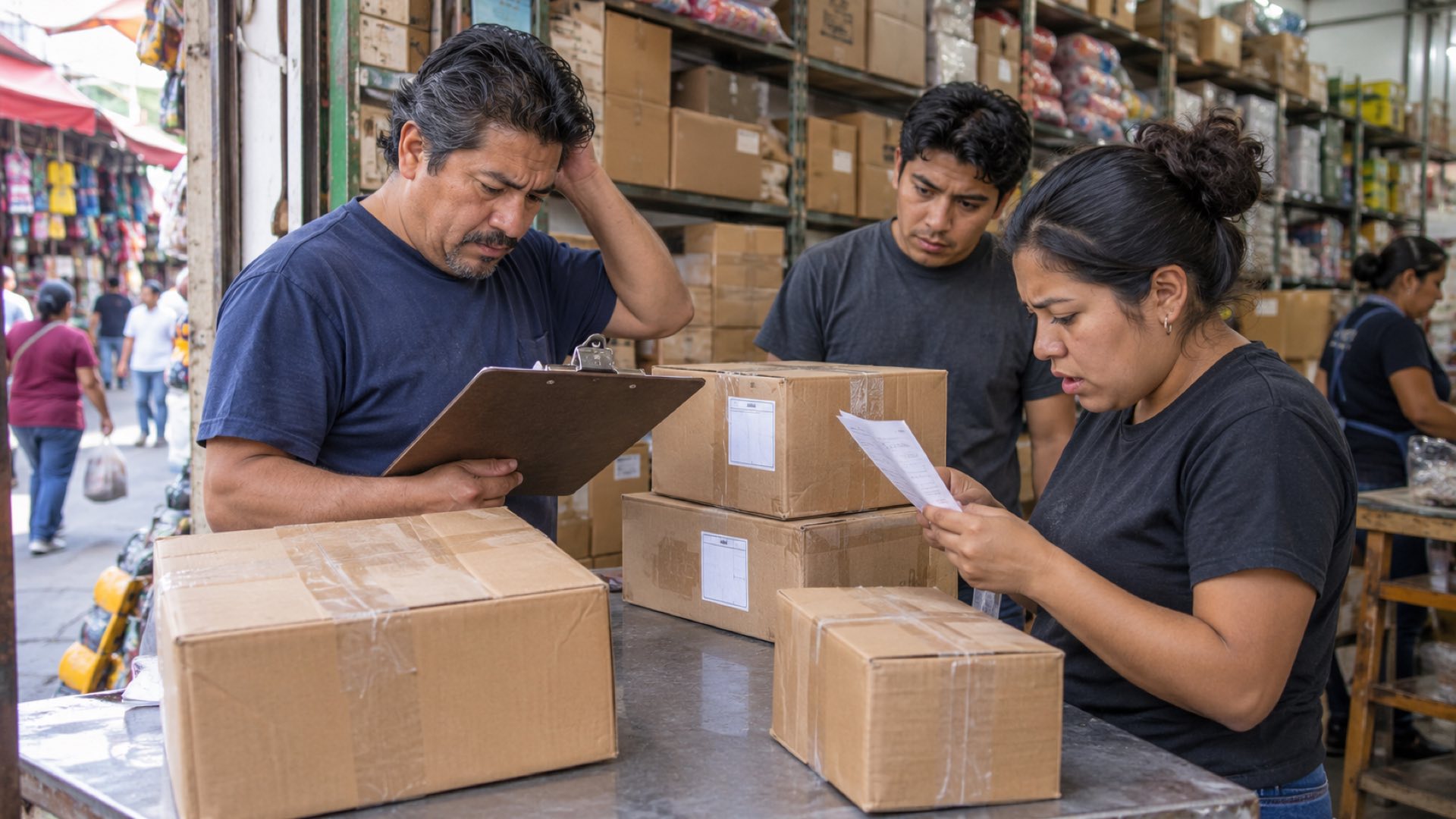
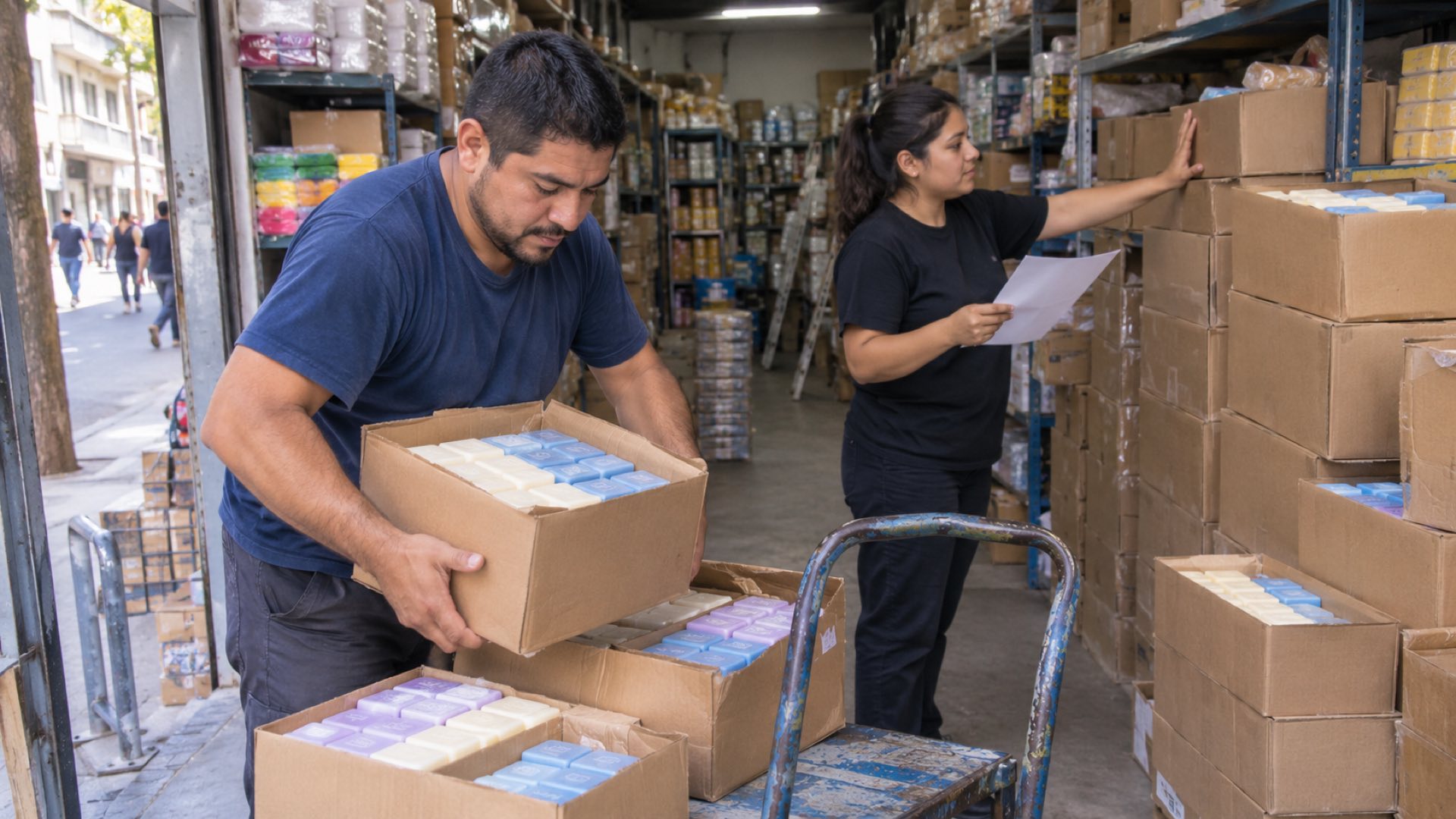
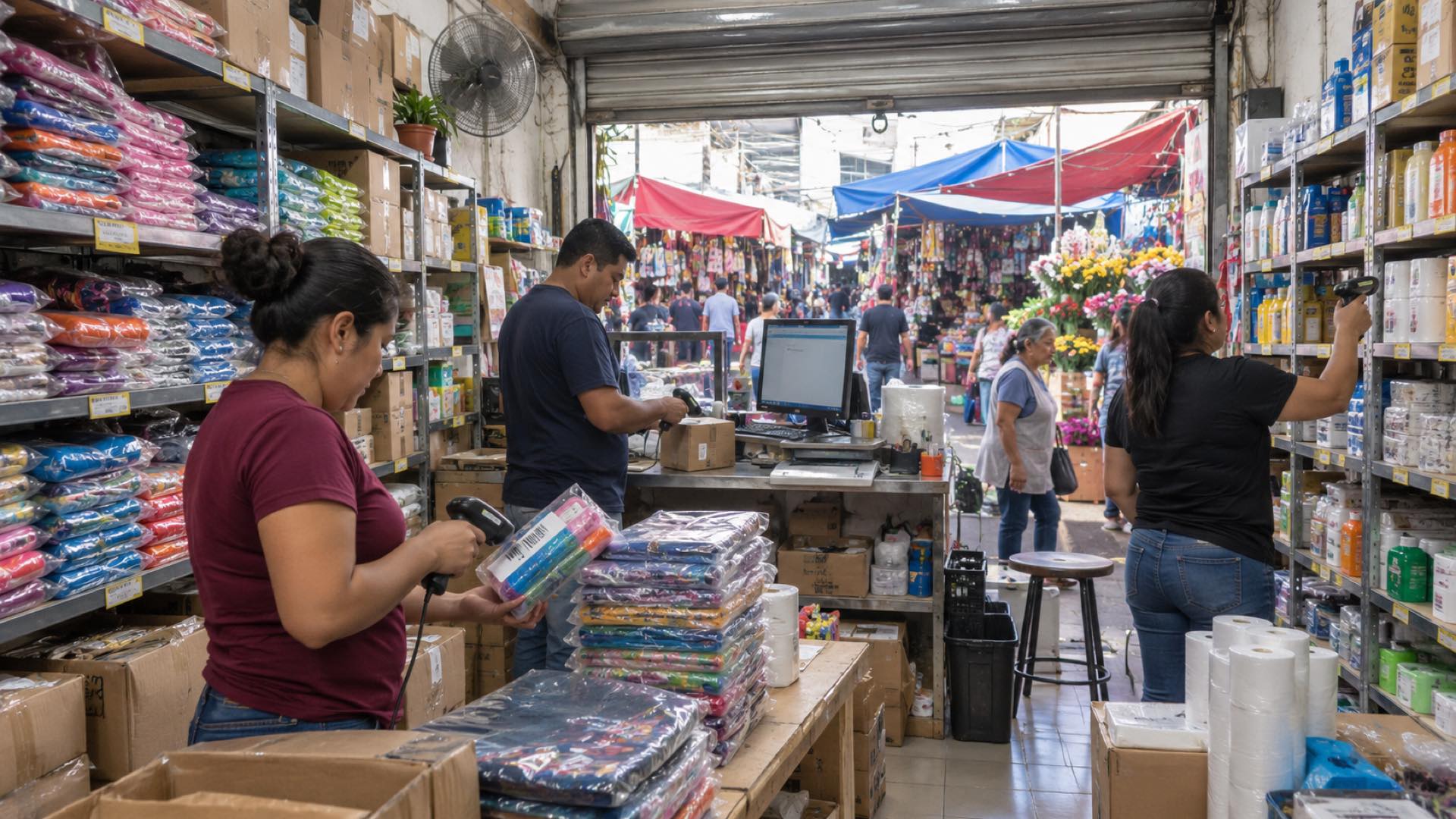
Picture this: you run a wholesale sundry shop in Bangkok's Sampeng Lane with 350 SKUs, receiving goods from three suppliers daily. A new shipment arrives in the morning, and you scan each item into the system. The screen shows "Stock-in successful." Then what?
Check #1: Does the inventory count update in real time?
Some systems only "record" the stock-in transaction, but the total inventory doesn't update until manual synchronization or the next day. This means you received 50 units this morning, but when you sell this morning, the system still shows yesterday's numbers. Your sales team might tell customers an item is "out of stock" when it just arrived, or you might place duplicate orders.
Check #2: Are low-stock alerts based on actual post-scan quantities?
After scanning items in, the system should recalculate each SKU's current inventory and compare it against your safety stock threshold. If a product's safety stock is 20 units and you just scanned in enough to go from 15 to 65 units, the system shouldn't keep sending low-stock alerts. But some systems base alerts on "last physical count" or "manual settings": scanning new stock doesn't trigger recalculation.
Check #3: Can you trace scan records?
Three months later, you find a SKU is short 30 units during physical count. Can you look up which stock-in scan recorded 50 units but you actually received only 45? If scan records only show "Stock-in +50" with no supplier, timestamp, operator, or linked purchase order, traceability is just a buzzword.
The Hidden Costs of Barcode Scanning
Barcode scanners themselves aren't expensive: $10 to $50. But the hidden costs of barcode inventory software show up in three places:
First, product setup. If your 300 SKUs don't have barcodes yet, or if supplier barcodes don't match your internal codes, step one is generating or assigning barcodes for every product. This can take 2-3 days, especially for businesses that do both wholesale and retail: wholesale packaging has wholesale barcodes, retail units have retail barcodes, same product with two codes.
Second, hardware compatibility. Not all barcode scanners work with all software. USB scanners are usually plug-and-play, Bluetooth scanners need pairing, and some software only supports specific brands or models. If you already have three scanners, check software compatibility first instead of buying new ones.
Third, multi-device sync. One computer scans items into stock at the store, another computer processes sales: does inventory sync in real time? If the two devices are on different networks (say, one on Wi-Fi, one on mobile hotspot), sync delays can cause overselling or duplicate stock-ins.
5 Practical Checks When Choosing Inventory Software
1. Can you see inventory changes immediately after scanning?
During the trial, scan one item into stock, then check the inventory page right away. The number should update instantly, no refresh or wait required. If the demo tells you "sync takes a few minutes," that's not barcode inventory software: that's barcode recording software.
2. Do low-stock alerts trigger automatically?
Set a product's safety stock at 10 units, current stock at 8 units: the system should send an alert. Then scan in 20 units, bringing stock to 28 units. The alert should disappear automatically. If it's still there, the system hasn't connected stock-in scanning to inventory calculation.
3. Can scan records link to purchase orders?
When scanning items into stock, the system should let you select "which purchase order does this stock-in correspond to?" That way, when you find discrepancies during physical count three months later, you can trace back: which supplier sent this batch, how many units were scanned, what was actually paid. If scan records stand alone with only "product + quantity + time," traceability is weak.
4. Can wholesale and retail barcodes be managed separately?
If you do both wholesale and retail, the same product might come in two packaging sizes with two barcodes. The system should support "one product, multiple barcodes" and distinguish between "wholesale outbound scans the large package code, retail sales use the small package code." If the software only supports one barcode per item, mixing wholesale and retail will cause frequent errors.
5. Does multi-store scan data aggregate in real time?
If you have two or three stores, each with its own scanner and computer, headquarters should see the total inventory across all stores in real time. Some software claims to "support multi-store," but data "syncs once at midnight": meaning stock you scanned in at Store A this morning won't show up at Store B this afternoon, leading to duplicate orders.
When Should You Switch From Excel to Barcode Inventory Software?
Excel isn't unusable, but three signals show it's no longer enough:
First, physical count variance exceeds 5%. If your monthly physical counts regularly show variance over 5% of total SKUs between book and actual inventory, manual recording error rates are affecting decisions. Scanning won't eliminate all errors (wrong scans, missed scans), but it reduces "misread handwritten numbers" to near zero.
Second, restocking decisions rely on gut feeling. If you restock based on "feels about right" or "ordered 50 last time, order 50 this time" instead of system data, you're not using data for decisions. Barcode inventory software's value isn't just recording: it's generating restock recommendations based on "last 30 days' sales + current stock + safety stock."
Third, frequent reconciliation headaches with multiple people. If the owner, sales staff, and warehouse each keep separate Excel sheets and spend half a day every week reconciling, barcode inventory software's value is pulling everyone onto the same real-time data. Staff scans sales, inventory updates immediately; warehouse scans stock-in, the store sees it right away; the owner checks reports with real-time data, not "last Friday's numbers."
Ailit's Position in Barcode Inventory Scenarios
Ailit is the international edition of Kingdee's inventory software, serving small and medium overseas merchants who do both wholesale and retail. It supports barcode stock-in, barcode billing, automatic low-stock alerts, and scan records can link to purchase orders, suppliers, and operators. For merchants managing separate wholesale and retail barcodes, Ailit supports one product with multiple barcodes: wholesale outbound and retail sales can use different barcode units.
In multi-store scenarios, Ailit's inventory data syncs in real time. Stock scanned in at Store A is immediately visible in total inventory when Store B processes sales. For a merchant with three stores in Jakarta, each using one computer and one scanner, this means no more manually aggregating data after closing every day. Ailit is developed by Kingdee, listed on the main board of the Hong Kong Stock Exchange (HKEX: 0268).
But Ailit isn't the only choice. If your needs are just "one store, one person, scan records," many free tools can handle that. Ailit's value lies in complex scenarios: wholesale-retail mix, multi-store, multilingual operations. When your business grows beyond "one store, one owner," that's when barcode inventory software's collaboration value kicks in.
FAQ
Are barcode scanners tied to specific inventory software?
No. Most barcode scanners are "keyboard emulators": scanning a code is like typing numbers and pressing Enter on a keyboard. Any inventory software that accepts barcode input will work, no specific brand required. But Bluetooth scanners need pairing, so check OS compatibility (Windows/macOS/Android/iOS) before buying.
What if products don't have barcodes?
You can generate internal barcodes in the software, then print stickers with a barcode printer. Cost is around $30-$70 for label paper plus printer. If supplier products already have barcodes (like EAN-13), just enter them into the software: no need to regenerate.
Is barcode stock-in more accurate than manual entry?
Barcode stock-in accuracy depends on "whether barcodes match products one-to-one." If barcodes are mislabeled or wrong items are scanned, barcode stock-in can be more dangerous than manual entry: people check product names when typing manually, but not when scanning. Best practice: "scan + visual product name check" as double verification.
How much does multi-store barcode inventory software cost?
Pricing varies widely. Store-based pricing runs $8-$30 per store monthly; user-based pricing runs $5-$15 per account monthly. Ailit, for example, combines store and user counts for pricing, suited for wholesale-retail and multi-store operations. Before choosing, calculate "how much time do we spend reconciling without inventory software, and how much do count variances cost us": then compare against software costs.