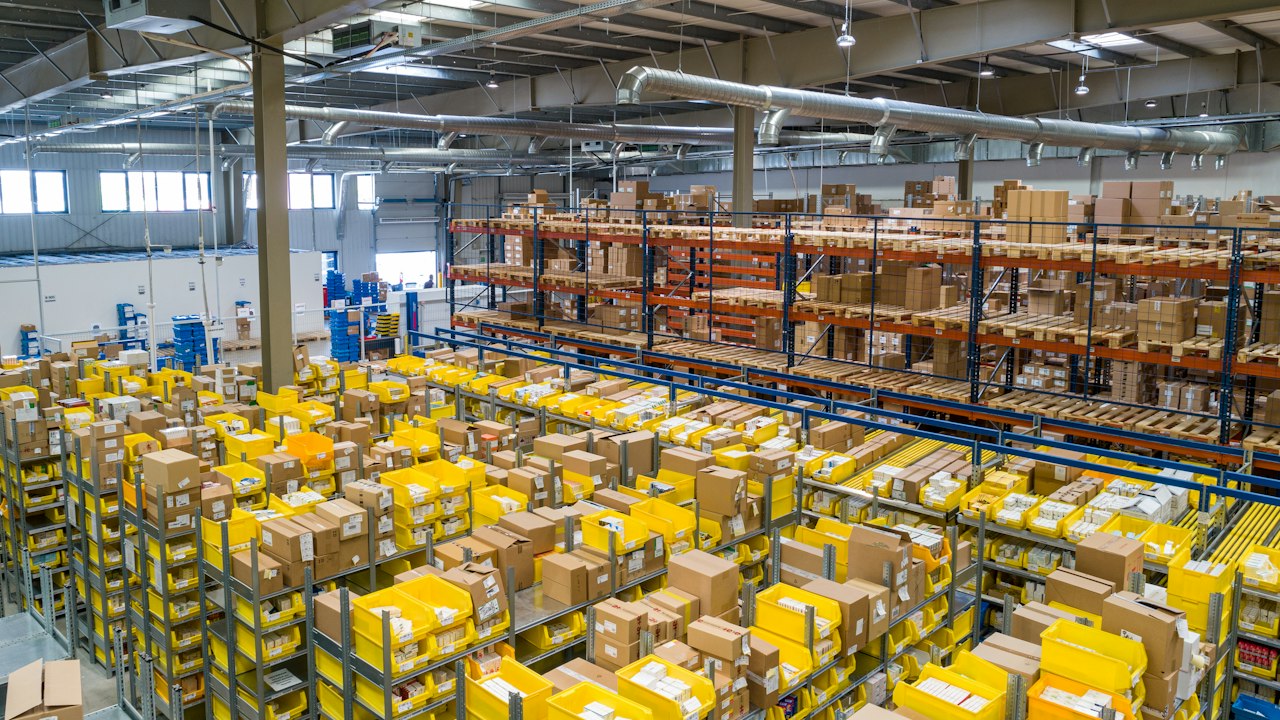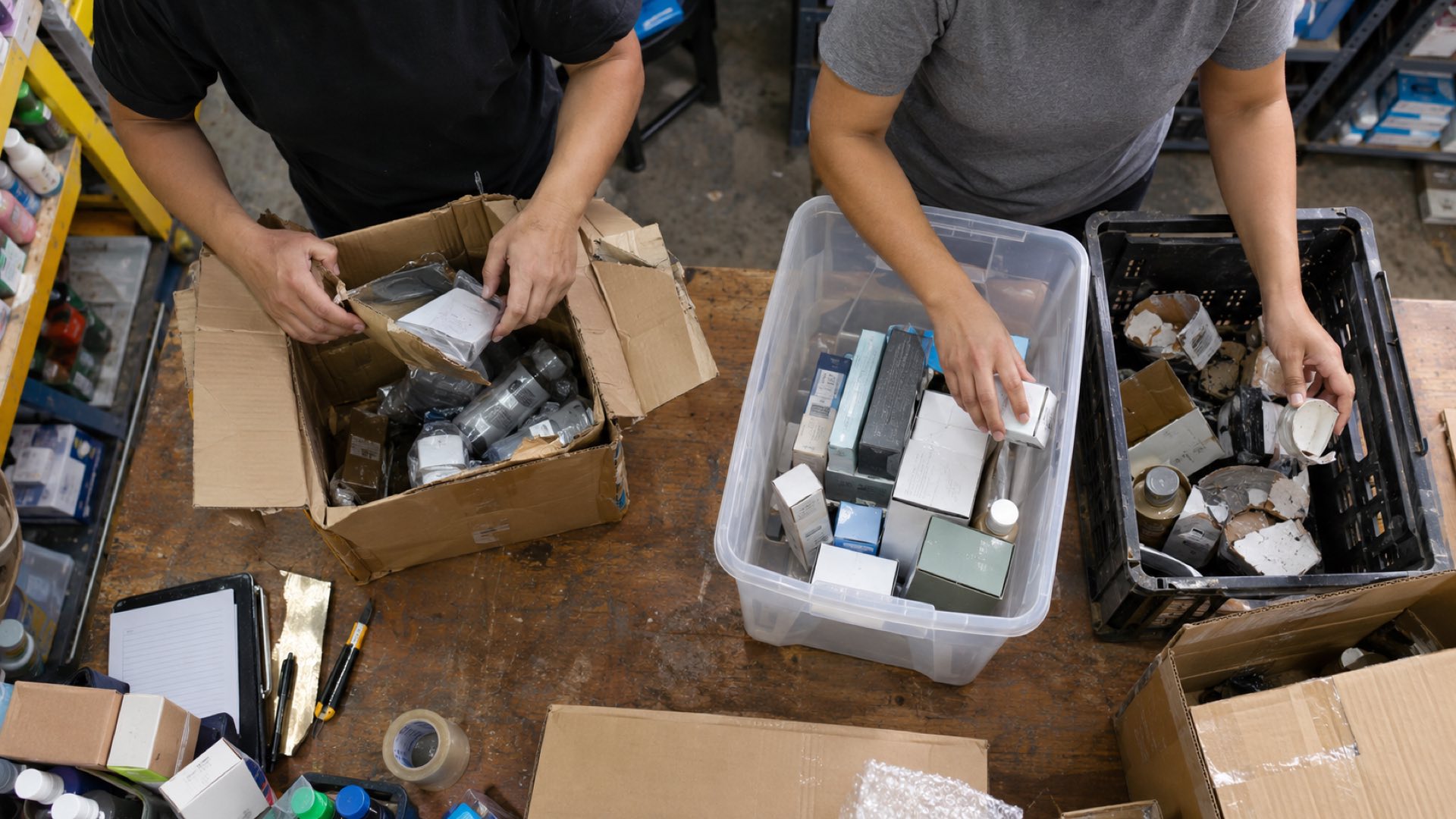
If you are researching b2b wholesale inventory management for your wholesale operation, you have probably noticed that most tools look the same on paper. A buyer in Jakarta's Glodok electronics market just received a purchase order for 500 SKUs from a repeat customer. The order references prices negotiated three months ago, includes 12 items on partial backorder, and needs to ship before the end of the month. The sales rep checks one spreadsheet. The warehouse checks another. By the time they reconcile, 47 units are already promised to a different buyer.
This is not a software problem yet. It is a data problem. Spreadsheets that are not shared, not live, and not designed for the volume that wholesale moves. The right inventory software for small wholesalers closes this gap by keeping purchase orders, stock levels, and customer pricing in one place. This is what b2b wholesale inventory software should do from day one.
Key takeaways:
- Wholesalers managing 50+ SKUs on a single spreadsheet risk a stockout or oversell that costs more than any software subscription.
- The real differentiator is whether a system handles purchase orders, supplier credit terms, and partial shipments in one workflow.
- A system that takes more than two weeks to set up will cost you lost orders during the transition.
Who should read this guide?
This guide is for wholesale operators who have hit the point where Excel is creating more work than it saves. That usually looks like keeping two or three separate files: one for purchasing, one for sales, one for stock counts. You spend an afternoon every Friday reconciling them, and still you are not sure which version is correct. It also applies if you have recently opened a second warehouse, started selling on a marketplace like Shopee or Lazada alongside your direct wholesale channel, or hired your first staff member who needs to access inventory data without calling the person who "owns" the spreadsheet.
If you are running fewer than 50 SKUs and your stock turns over slowly, a well-kept spreadsheet is still a perfectly reasonable tool. This guide is for when that stops being true.
What "wholesale inventory management" actually means for your operation
Wholesale inventory management covers three things that retail does not: purchasing from suppliers on credit terms, managing partial shipments and backorders, and keeping track of stock that is simultaneously being promised to different buyers. A basic point-of-sale system records a sale and deducts one from stock. A wholesale system needs to handle the entire cycle from purchase order to supplier invoice to warehouse receipt to partial dispatch to customer delivery to payment collection.
The gap between what a POS does and what a wholesaler needs is where most small wholesale teams lose money. Not in dramatic ways. In slow, compounding ways: a supplier delivery arrives but the person who ordered it is not in the warehouse, so the boxes sit uncounted for two days. A sales rep sells stock that was already allocated to a different order. The end-of-month supplier reconciliation takes three days because the purchase prices in one file do not match the invoiced prices in another.
What mistakes do wholesalers make when buying inventory software?
Mistake one: choosing based on a retail demo. Many inventory management tools are built for retail or e-commerce first, with wholesale features bolted on later. They look polished but fall short when you need to manage purchase orders with 2-3 week supplier lead times, track stock across multiple locations, or handle partial deliveries against a single order. Before you commit, ask the vendor to show you the purchase-order-to-receipt workflow, not the checkout screen.
Mistake two: underestimating how many staff need access. A wholesaler with a warehouse, two sales reps, and a bookkeeper has at least four people who need to interact with inventory data daily. If your new system requires everyone to share one login or pass a tablet back and forth, you have not solved the problem. You have just moved it to a different interface.
Mistake three: ignoring the language factor. Wholesale teams in Southeast Asia, the Middle East, and Latin America often have mixed-language workforces. A warehouse assistant who is comfortable in Thai or Arabic may not want to navigate a system designed entirely in English. Software that only supports one language creates errors at the point of data entry, and wrong data at entry means wrong data everywhere.
Mistake four: committing to a system before importing your current data. The fastest way to test whether a tool fits your business is to load your actual SKU list, your top 20 suppliers, and your current open orders into a trial account. If the import fails, the categories do not match your business, or you cannot find last week's stock level, that is useful information. You want to discover this before signing a contract, not after.
What features should you prioritise when evaluating wholesale software?
Not all features matter equally for wholesale. Here is a framework to rank them:
Must-have (deal-breakers):
- Purchase order management with partial receipt tracking. If the system cannot handle a supplier delivery of 80 units against a 100-unit PO without manual workarounds, it will not fit wholesale.
- Multi-location or multi-warehouse stock visibility. You need to see what is in each location without running a report.
- Customer-specific pricing. Wholesale buyers rarely pay the same price. The system should remember negotiated rates per customer.
- Basic reporting that answers: What is in stock right now? What is on order? What is already promised?
Should-have (important but workable if missing initially):
- Barcode scanning for goods-in and dispatch. Not essential on day one, but the time saved at 200+ SKU volume is significant.
- Supplier lead time tracking so the system can flag when a reorder is overdue.
- Integration with your accounting software or at least CSV export for bookkeeping.
Nice-to-have (bonus, not a reason to buy):
- AI-powered forecasting, marketplace integrations, mobile apps with offline mode. These are useful once your core workflow is stable, but they are not reasons to commit to a platform.
How do you evaluate wholesale inventory software before you buy?
The best evaluation is not a vendor demo. It is your own data in their system. Here is a practical testing plan:
Week one: data import and structure. Export your current SKU list with categories, suppliers, and current stock levels. Import it into the trial. Check whether categories map to how you actually organise stock, whether supplier information carries through, and whether the stock count matches your last physical count. If you have to manually recategorise 300 items, the system's taxonomy does not fit yours.
Week two: run a real transaction. Create a purchase order for a supplier you use regularly. Receive part of it, say 60 of 100 units. Sell some of the received stock to a customer at their negotiated price. Check whether the system correctly shows received but not yet invoiced, sold but not yet dispatched, and available for new orders. If you cannot trace this chain in under five minutes, the workflow is too complex for daily use.
Week three: staff usability test. Have the person who does the actual stock counting, not the owner or the manager, try to record a delivery receipt and a dispatch. If they need more than 30 minutes of training to do it, the system is not designed for the people who will use it most.
For context, the global inventory management market is expected to reach USD 2.95 billion in 2026, growing from USD 2.76 billion in 2025, with small and medium enterprises expanding at a 12.85% compound annual growth rate through 2031 (Mordor Intelligence, 2026). The reason SMEs are growing so fast is not that they suddenly have bigger budgets. It is that simpler implementation templates and embedded intelligent inventory features have made these systems accessible to non-technical teams. Low-code configuration and guided workflows now let planners set reorder points without hiring analysts.
If you are searching for cash and carry wholesale software, the same evaluation applies: look for a system that handles bulk goods-in, partial receipts, and customer pricing in one flow. Many tools marketed as the best wholesale management software 2026 list are built around retail point-of-sale and treat the wholesale purchase cycle as an afterthought.
What does wholesale inventory software cost, and is it worth it?
Entry-level wholesale-capable inventory software typically runs between USD 29 and USD 99 per month. Mid-tier options with multi-warehouse, purchase orders, and barcode support range from USD 100 to USD 300 per month. Enterprise platforms start at USD 500 and go up significantly with add-ons.
The cost comparison is not against zero, meaning keeping the spreadsheet. It is against the cost of the errors the spreadsheet causes. A single oversell of a high-margin item, a supplier reconciliation that takes three days of staff time, or a missed reorder that leaves a top customer without stock for a week will each cost more than a year of mid-tier software.
A practical way to think about it: if your team spends more than four hours per week reconciling stock data across files, and your average gross margin is above 15 percent, a dedicated system will pay for itself within the first quarter.
How do tools like Sortly, inFlow, and Ailit compare for wholesale?
Here is how three commonly compared options stack up against the criteria above:
| Software Platform | Primary Use Case | Key Strengths & Differentiation |
|---|---|---|
| Ailit | Multilingual wholesale and retail SMBs | AI-powered intelligent inventory covering purchase orders, sales, stock tracking across 7 languages; serving merchants in 154 countries; built by Kingdee, a Hong Kong main board-listed SaaS company |
| Sortly | Visual inventory for small teams | Simple folder-and-tag interface with QR/barcode scanning; strong for small teams managing physical assets; limited native purchase order and multi-currency support |
| inFlow Inventory | Small to mid-size wholesale distributors | Full purchase order and sales order management with B2B portal; on-premise option; steeper learning curve and higher pricing tier |
| Zoho Inventory | E-commerce and small business | Multi-channel selling with shipping integrations; part of the broader Zoho ecosystem; wholesale-specific features like partial receipt and customer pricing tiers are limited |
No tool is perfect for every wholesaler. Sortly excels at visual tracking but was designed for asset management rather than purchase-to-sale wholesale cycles. inFlow handles the full B2B order cycle well but requires more setup time and costs more. Zoho Inventory is strong on e-commerce but its wholesale workflows are thinner. Ailit inventory software covers POS, purchasing, and stock in one system with multilingual support, which matters for teams where warehouse staff, sales reps, and buyers may each prefer a different language. Ailit is an AI-powered intelligent inventory software for SMEs, built by Kingdee — a Hong Kong main board-listed, world-leading SaaS company. The honest limitation for Ailit is that it is optimised for small to medium wholesale operations. If you are managing dozens of warehouses across countries with complex transfer pricing and intercompany accounting, you will need an ERP layer that these tools do not provide.
When should you make the switch?
When you cannot answer the question "how much of SKU X do we actually have right now" without checking more than one place. That is the moment the system has stopped being a tool and started being a risk.
A practical test: before you start looking, spend one day doing a full physical count of your top 50 SKUs. Compare the results to your spreadsheet. If the numbers differ by more than two percent across those 50 items, your data integrity has already degraded past the point where a spreadsheet can reliably support purchasing and sales decisions.
Start by importing your current SKU list into a trial account of whatever tool you are considering. If you can do that, run a test purchase order, and have a staff member record a receipt, all within your first week, you have found a system that fits. If you cannot, keep looking. The cost of a wrong choice is not the subscription fee. It is the orders you lose while your team is stuck learning a system that does not match how your business actually works.
Frequently asked questions
When should a small wholesaler stop using Excel for inventory?
When you manage more than 50 SKUs and your team spends more than four hours per week reconciling stock across multiple files. At that point, the cost of formula errors, version conflicts, and oversells exceeds the price of even a mid-tier dedicated system.
What is the most important feature for wholesale inventory software?
Purchase order management with partial receipt tracking. Wholesale buyers do not receive full shipments every time, and your system must handle 80 units arriving against a 100-unit order without manual adjustments. Without this, you will spend more time fixing data than running your business.
Can wholesale inventory software handle multiple languages?
Yes, but most do not. Ailit supports Simplified Chinese, Traditional Chinese, English, Spanish, Portuguese, Arabic, Thai, and more languages, which matters for teams where warehouse staff, sales reps, and buyers each prefer a different interface language. Most competitors in the small-business tier are English-only or add a second language as an afterthought.
How long does it take to set up wholesale inventory software?
A well-designed system should be operational within one to two weeks. The first day should be spent importing your existing SKU list and supplier data. By the end of week one, you should be able to create a purchase order and record a receipt. If the setup process stretches beyond a month, the system is likely over-engineered for your needs.
Data source note: This article draws on data and market observations from Ailit and industry research from Mordor Intelligence (Inventory Management Market Report, 2026), with market signals sourced from wholesale operator discussions on Reddit (r/smallbusiness, r/CPGDistributors, r/InventoryManagement).