Choose the Right POS System for Wholesale and Retail

2026-09-08

POS system for wholesale and retail

When you shop for a POS system for wholesale and retail at an overseas storefront, the first filters most owners apply are language support and local payment methods. Those matter. The filter that determines whether you keep the same system three years from now is whether your business is pure retail or a wholesale-retail hybrid.

The two models place almost no overlapping demands on inventory, order creation, and reconciliation. Pick the wrong model and within two years you will be migrating every record to a new platform.

Where pure retail and wholesale-retail hybrid systems actually differ

The difference sits in the inventory outbound logic. Retail is scan-and-deduct, completed on the spot. Wholesale is order-then-reserve, deducted only when goods are actually picked up. If both workflows share a single inventory number, the books will drift over time and reconciliation breaks down.

If your store only does retail, most POS systems on the market will do the job. Square, Shopify POS, and Loyverse all run mature workflows. A new cashier can be trained in half a day.

The problem starts the moment you take a wholesale order. Buyers expect case-price quotes, monthly credit terms, scheduled pickups, and a single order with 30 SKUs each at a different discount. The moment a pure-retail POS tries to handle all of that, the inventory logic breaks.

How do you manage inventory when wholesale and retail share the same stock?

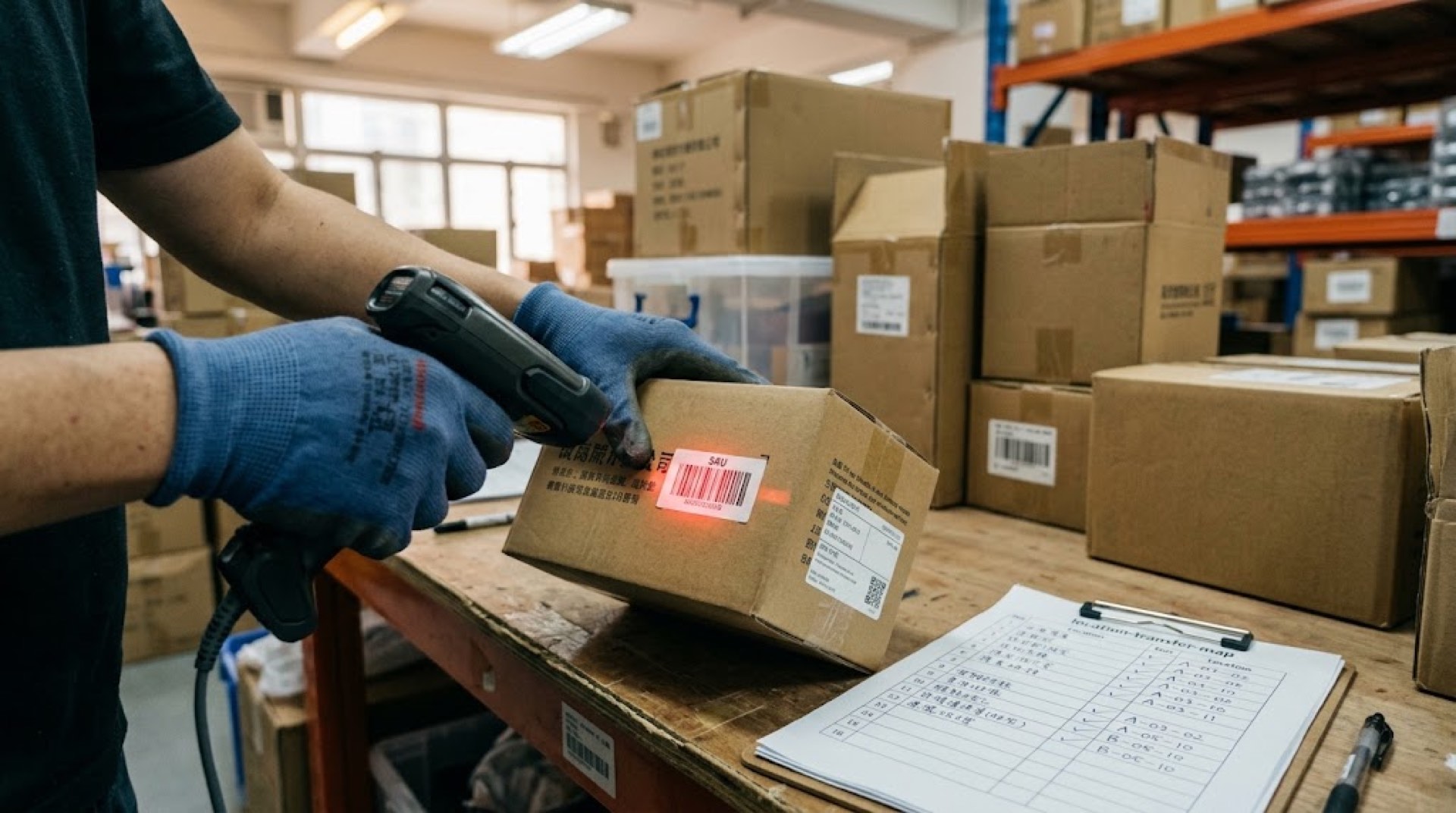
You isolate the same pool of inventory under two separate outbound logics. Retail deducts loose units and ships immediately. Wholesale deducts full cases and only truly reduces stock when the pickup happens.

Why must they be separated? Retail outbound completes instantly. Wholesale outbound is delayed by days while goods are staged for pickup. During those days, is the available inventory number reserved for retail walk-ins, or already pre-allocated to a wholesale order? Without that distinction, the books will never balance.

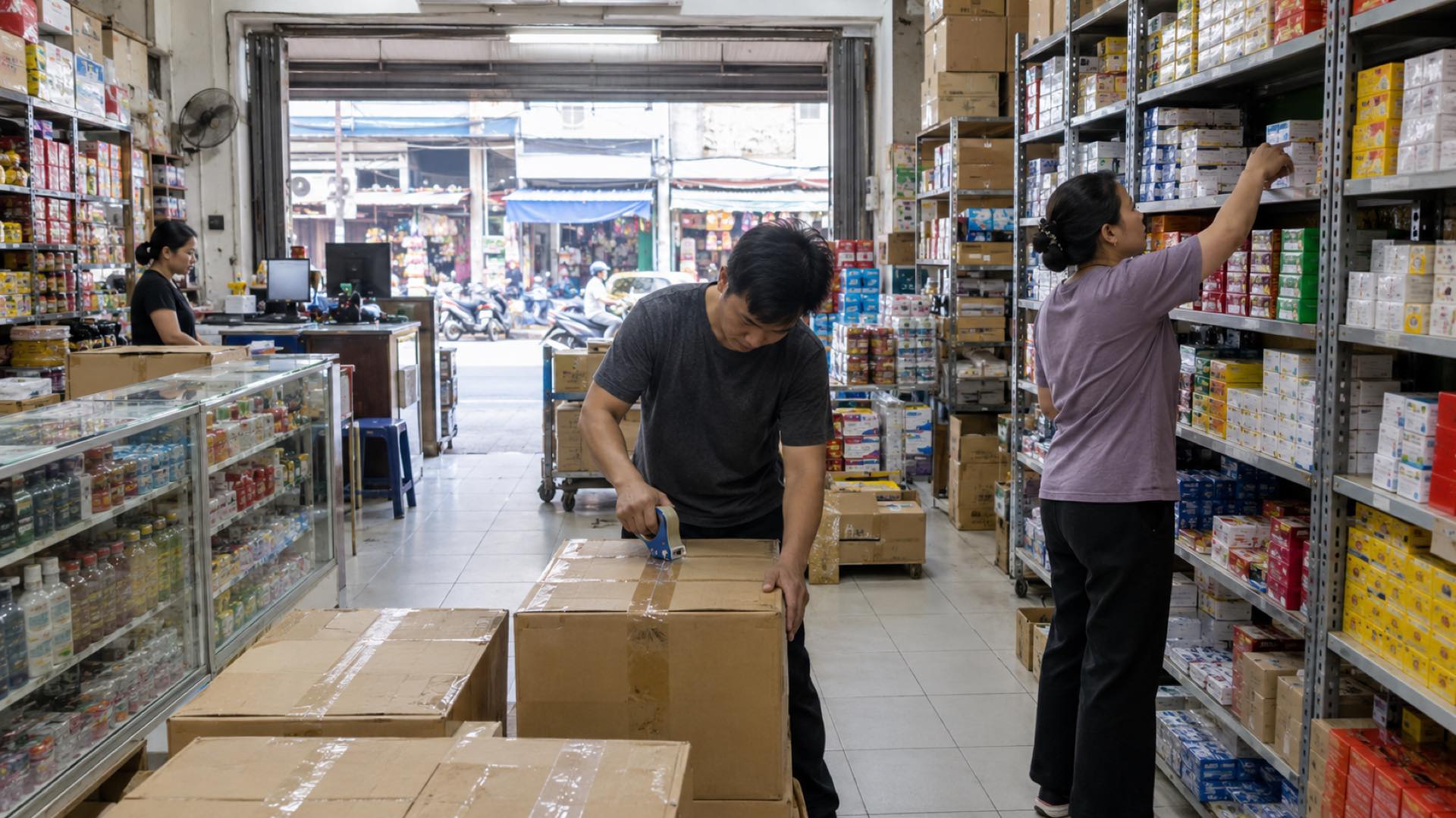
Merchants selling daily goods around Sampeng Lane in Bangkok run exactly this model. A retail counter at the front serves walk-ins. A back warehouse ships to second-tier wholesalers in nearby provinces. A typical shop carries over 200 SKUs across its barcode catalog, with three to five stock points scattered along the lane. Retail sells through the day. Wholesale picks orders at night. If the system has not separated the two outbound logics, every morning reconciliation finds last night's numbers do not add up.

The same pattern shows up at Dragon Mart in Dubai. Traders at a single booth sell loose items to walk-in buyers in the morning and ship full cartons to customers across the Gulf in the afternoon. Cross-border transit times stretch the gap between order and delivery even further. For inventory management for hybrid stores, that time gap is the single biggest source of reconciliation error.

What is the real cost of switching POS systems after two years?

The real cost is three to four weeks of data chaos and a full re-entry of every record, on top of the subscription fee.

Deloitte's 2026 Retail, Wholesale & Distribution Outlook reports that 96% of global retail executives expect revenue growth, and 81% expect margin expansion in the year ahead. When the business is growing and the system cannot keep up, you get dragged down. Accenture research points out that demand for core US supply chain roles could rise 19% by 2035, while the labor pool is expected to grow by only 3.2%. You cannot hire your way out of a system gap.

If you started on a pure-retail POS and two years later the wholesale side has grown enough to force a switch, you are re-entering product records, re-counting inventory, retraining staff, and rebuilding supplier reconciliation workflows. For three to four weeks the old system is still running and the new one is not settled. Numbers on both sides will not match. That bill is far larger than choosing the right system from day one.

Which POS system should overseas stores choose?

It depends on whether wholesale orders will cross 30% of your volume within a year. If they will, or if you are already not sure, do not start with a pure-retail POS.

Square and Shopify POS are mature for pure retail, with broad hardware ecosystems. Their wholesale support is stitched together from third-party add-ons. Credit sales, multi-tier pricing, and full-case outbound flows are all incomplete as native workflows. Loyverse starts free and suits single-store retail. Its inventory model is single-layer, with no distinction between wholesale pre-allocations and retail-available stock.

Ailit is an AI-powered intelligent inventory software for SMEs, built by Kingdee — a Hong Kong main board-listed, world-leading SaaS company. Its design starting point is the wholesale-retail hybrid. One inventory pool can handle loose-unit retail and full-case wholesale at the same time, with outbound logic kept separate so reconciliation runs on two clean ledgers.

Kingdee's Zhihuiji line serves over 3 million merchants, and Ailit is its international edition, serving merchants in more than 130 countries and regions. The system covers both cross-border and local procurement, supporting settlement in 154 currencies with 170+ exchange rate settings. Ailit supports Simplified Chinese, Traditional Chinese, English, Spanish, Portuguese, Arabic, Thai, and more languages. It positions itself as a multilingual POS for overseas merchants who need one system to cover both local walk-ins and cross-border wholesale.

The caveat is simple. You actually need wholesale. If you are running a coffee shop, the wholesale module sits unused and the interface is heavier than Square.

The right axis for choosing inventory software for an overseas store is not how many features a product has. It is whether your business model matches the inventory model. Once you know whether you are retail-first or wholesale-retail hybrid, the shortlist narrows to two or three products on its own.

FAQ

Can one POS system for wholesale and retail manage inventory for both models?

Yes, but it depends on what "both" means. If you only need multi-store retail inventory sync, most overseas POS systems can do it. If you need wholesale pre-allocations and retail-available stock calculated separately, the system must natively support two outbound logics. Ailit intelligent inventory software is built for exactly this. Square and Loyverse are built primarily for pure retail.

How should overseas merchants choose a POS system for wholesale and retail?

First, look at whether your supply chain runs on container shipments from origin markets or on local wholesale-market purchasing. The first needs in-transit inventory management. The second needs frequent small-batch replenishment and supplier reconciliation. The system covers both scenarios, supporting settlement in 154 currencies with 170+ exchange rate settings. If you only do local retail, its feature set will be heavier than you need.

What should a pure-retail store look for in a POS system for wholesale and retail?

Three things: how fast staff can learn it, what hardware it supports, and how well it localizes payment methods. Square, Shopify POS, and Loyverse all cover these, with half-day training. But if you expect wholesale orders to pass 30% of revenue within a year, do not start with a pure-retail POS. In two years you will be forced to switch, and the data-migration cost will far exceed choosing correctly from the start.

相關閱讀推薦

item

批發零售收銀系統怎麼選?先分清你的生意是純零售還是批零兼營

閱讀全文
item

小微便利店庫存管理:如何用進銷存系統避免缺貨與過期損耗

閱讀全文
item

多門店管理系統點樣揀:開了第二間店後庫存對不上的 5 個解決方法

閱讀全文
專屬顧問在線
遇到問題隨時聯絡我們
whatsapp:
+86-15118154473
工作日:9:00-18:00
(UTC+8 北京時間)
微信線上客服
需要發送圖片/文字?聯絡我們支持
400-830-8060
工作日:9:00-18:00
(UTC+8 北京時間)