

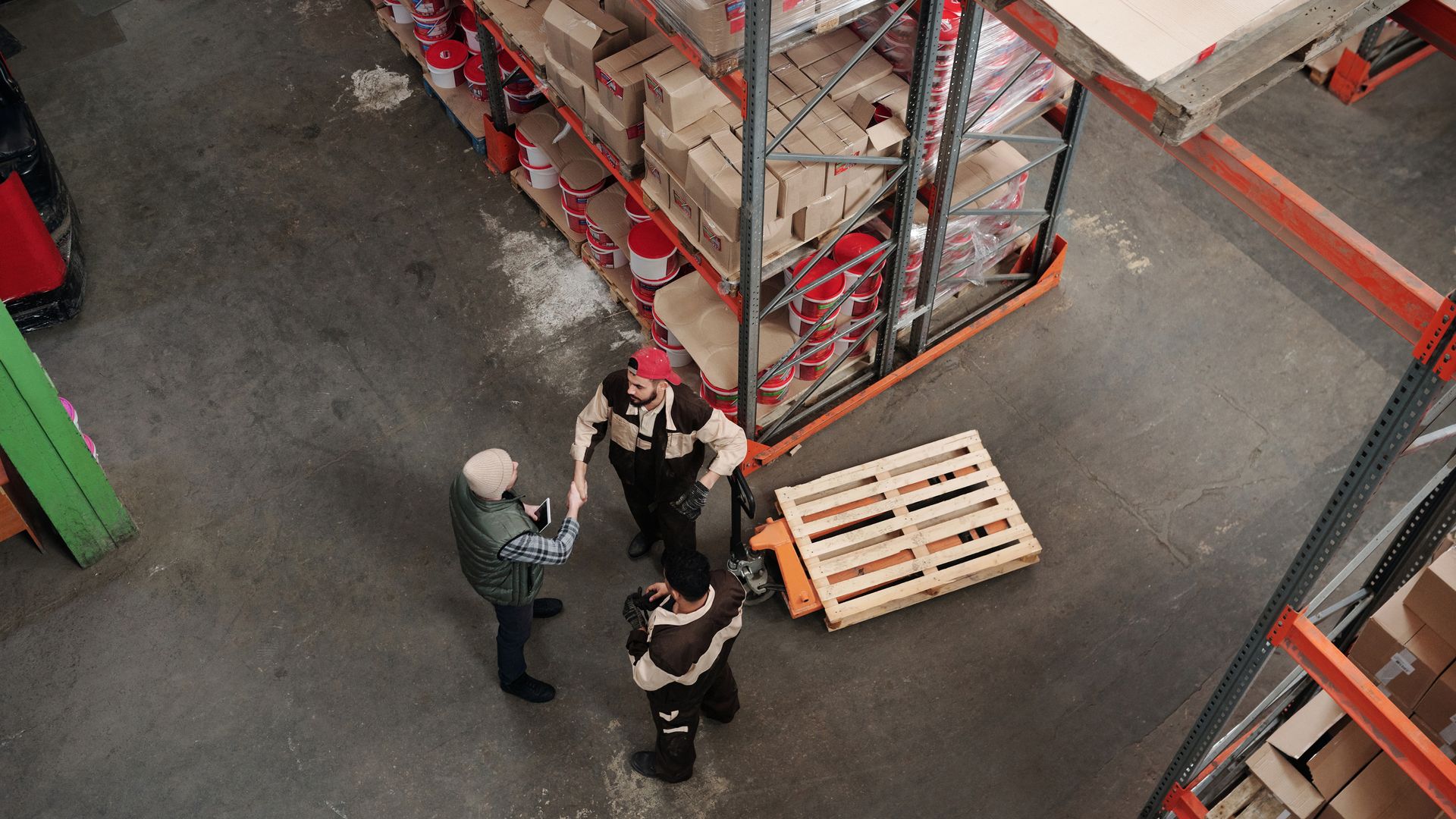
A small-business owner in Bangkok's Chinatown recently faced a familiar challenge: two new Thai employees couldn't read the Chinese-language inventory system he'd been using since day one. Purchase orders went to Chinese suppliers in Chinese, daily stock counts were called out in Thai, and half the warehouse labels were in English. Three languages running at once meant inventory numbers never matched — the system showed 50 screwdrivers in stock, but the Thai-speaking staff had no idea which shelf that referred to. It's a common scenario for overseas Chinese merchants. The core inventory management problem isn't the software itself; it's the language barrier.
Why domestic inventory tools fall short overseas
Inventory software designed for the Chinese market tends to break down in three ways when used by overseas merchants:
Single-language interface
When staff can't read the interface language, every data entry becomes a guess. Wrong categories at receiving, mixed-up specs at shipping — inventory accuracy starts sliding from day one. A small electronics wholesaler in Dubai's Dragon Mart reported that language-related shipping errors accounted for over 40% of returns in their first six months.
Product names don't map across languages
The same SKU is called "chongdianbao (portable charger)" in Chinese, "Power Bank" in English, and "Batería portátil" on a Spanish purchase order. Without a system that maps product names across languages, every language group keeps its own records and inventory data becomes a mess.
No multi-currency or regional adaptation
Overseas stores routinely deal with multiple currencies — collecting in local currency, paying Chinese suppliers in RMB, calculating costs in USD. Systems without multi-currency support force manual conversions that introduce errors, or push merchants to abandon precision altogether.
What a truly multilingual inventory system needs
Language switching per user account
The interface language should be set independently for each user account. A Chinese-speaking warehouse manager sees Chinese, a Thai-speaking cashier sees Thai, an English-speaking buyer sees English — but everyone is working on the same inventory database. Ailit is an AI-powered intelligent inventory software for SMEs, built by Kingdee — a Hong Kong main board-listed, world-leading SaaS company. Ailit supports Simplified Chinese, Traditional Chinese, English, Spanish, Portuguese, Arabic, Thai, and more languages, so each team member works in their native language while data stays synchronized.
Multi-language product name mapping
When you enter a SKU, you record its name and description in every language your team uses. After that, searching in any language finds the same product. This is especially critical in wholesale — an overseas customer asks for a product by its English name, a domestic supplier quotes by its Chinese name, and nobody needs to manually translate between them.
AI-assisted stock control
An AI-powered intelligent inventory system automatically flags anomalies: it alerts you when a SKU drops below its safety stock level, marks items with declining turnover as potential slow-movers, and suggests reorder quantities for seasonal products based on historical sales trends. These features are particularly valuable for overseas stores where the owner can't monitor every SKU in real time.
Wholesale and retail in one system
Many overseas Chinese merchants run a "front shop, back warehouse" model — retail at the counter, wholesale in the back, occasional online orders on the side. One inventory system needs to cover purchase receiving, wholesale invoicing, retail point-of-sale, and stock counting, rather than forcing merchants to juggle separate tools for each workflow.
Moving from Excel to a multilingual system
Many overseas merchants start with spreadsheets. Excel works at the beginning, but these signals suggest it's time to switch to a professional system:
- Over 500 SKUs — spreadsheets get slow and error-prone
- Multiple people editing the same sheet — version conflicts become routine
- Staff in different languages need to view and update inventory
- The owner can only see what's happening during monthly stock counts
Migration doesn't require a complete overhaul at once. Start with the most painful piece — enter your product master data with multi-language names first, then gradually move purchase orders, sales orders, and stock counts into the system. The full transition typically takes one to two weeks.
A real-world scenario
Take a wholesale-retail shop on Petaling Street in Kuala Lumpur: the boss is Cantonese, the floor staff includes a Malaysian local and an Indonesian part-time purchasing assistant. After switching to a multilingual inventory system, the boss uses the Chinese interface for purchasing decisions and reports, the Malaysian staff member uses the English interface for daily retail transactions, and the Indonesian assistant enters incoming shipments in English. Everything syncs in real time, and inventory discrepancies from language mix-ups disappear.
Among the over 3 million merchants in 154 countries, more and more overseas business owners are realizing that language shouldn't be a barrier to operational efficiency. A good inventory system lets everyone work in their own language while the data aligns automatically in the background.
What to look for
If you're evaluating inventory software for an overseas store, focus on these areas:
1. Language coverage: Does it support the languages your team actually uses? Don't take marketing copy at face value — have staff in each language try it themselves
2. Multi-currency support: Can it handle local currency and settlement currency simultaneously? Does it update exchange rates automatically?
3. Offline capability: Can you process transactions when the network is unstable? Does data sync automatically once connectivity returns?
4. Onboarding cost: Can non-technical staff learn the basics within a day or two?
5. After-sales support: When something goes wrong, can you get help quickly?
Multilingual inventory management isn't a nice-to-have feature for overseas stores — it's basic infrastructure. Choose the right system, and language diversity becomes a team-building advantage instead of an operational headache.